Gentle Yoga
Body Kindness
Self Talk
We spend our whole lives surrounded by images telling us that “skinny” is the only way to be seen, valued, or relevant. But here’s the truth — you are already relevant, already worthy, already enough, exactly as you are in this moment.
In a world shaped by filters, editing apps, and highlight reels, it’s easy to forget that what we see online is rarely the full picture. Many of the images we compare ourselves to are altered, posed, or surgically enhanced. They’re not a standard to measure yourself against — they’re a reminder that so much of what we see isn’t reality.
Your body was created perfectly for you. It carries your story, your strength, your softness, your resilience. What truly shapes your experience of yourself isn’t the size of your jeans — it’s the way you speak to yourself, the way you nourish yourself, and the way you move through the world.
This is where body kindness begins.
Start by shifting the inner dialogue.
Instead of “I’m too fat,” try “I’m learning to care for my body with more love.”
Instead of “I’m so stupid,” try “I’m growing and learning something new.”
Even the thoughts we never say out loud leave an imprint. Our bodies listen. Our hearts listen. So speak to yourself the way you would speak to someone you love.
We come in all shapes, sizes, and seasons — and every single one is valid. With the right mindset, nourishing food, and gentle movement, you can support your body in ways that feel good, sustainable, and compassionate.
Body kindness isn’t about changing who you are.
It’s about honoring who you already are — and treating yourself with the tenderness you deserve.
Gentle Movement
Being healthy doesn’t require punishing workouts or spending hours at the gym. Movement is movement — and every bit of it counts. What matters most is that you start where you are and honor the pace your body is ready for.
Maybe that looks like a simple walk to your local park. As you move more, your body begins to crave that movement, inviting you to go a little farther, a little longer. You might begin with a mile, then add a quarter mile each week. Before you know it, you’re walking two miles without even thinking about it.
And if walking isn’t your thing, choose what is. Biking, swimming, dancing in your kitchen, or rolling out your mat for yoga — it all supports your well‑being.
Yoga, especially, isn’t about being flexible or twisting yourself into a pretzel. If you’ve seen my videos, you know I’m not the bendiest person in the world — and that’s exactly the point. Yoga is about moving your body with awareness, compassion, and curiosity. My classes focus on gently easing into poses from your starting point, with or without props. It’s never about matching someone else’s shape. It’s about honoring your own.
We all move differently. We all begin in different places. What matters is simply that you begin.
Progress
Progress doesn’t happen overnight. In a world obsessed with instant results and quick fixes, it can feel frustrating when change doesn’t show up as fast as we want it to. But real, lasting progress — the kind that supports a healthy, sustainable life — takes time, consistency, and compassion.
Living a healthy life and looking healthy don’t always happen at the same pace. The inner shifts come first. Long before you see physical changes in the mirror, your body is already responding to your efforts. Better sleep, improved digestion, steadier energy — these are the quiet victories that show up early, often before we even realize they’re connected to the choices we’re making.
This is why patience matters.
When you commit to small, healthy actions and repeat them consistently, your body begins to trust you. Subtle changes appear first, then bigger ones follow. Over time, those steady steps add up to transformations that others will notice — but more importantly, ones you will feel.
A helpful rhythm to remember:
- 21 days to build a habit
- 6 weeks to feel the changes
- 3 months for others to see them
So don’t let slow progress discourage you. Stay observant. Celebrate the small shifts. Honor the way your body responds to kindness, nourishment, and gentle movement. Progress is happening — even when it’s quiet.
Breath Focus
Why Breath Matters
Breath is our lifeforce — the quiet rhythm that carries us from our very first inhale to our final exhale. One of my favorite quotes says it beautifully:
“We enter life with an inhale and exit life with an exhale. And in between, we live for the moments that take our breath away.”
Our breath is always with us, always available, and learning to work with it can make life feel a little softer, a little steadier, and a lot more manageable.
Breath can help us relax into sleep, calm the nervous system, reduce tension, and even generate heat when we need it. It’s one of the simplest tools we have — and one of the most powerful.
I first turned to breathwork during anxiety attacks, long before I even knew what breathwork was. I just knew that slowing my breath helped me find my way back to myself. Now, I use it every day: to settle into meditation, to ground myself before yoga, to ease into sleep, and even to stay steady during more vigorous exercise. Different breaths for different moments — all of them supportive in their own way.
That’s the beauty of breathwork. By shifting the way we breathe, we can shift the way we feel.
In the next few topics, I’ll walk you through some simple techniques you can start using right away. And if you’re curious to explore even deeper, I highly recommend the book Breath by James Nestor — it’s a fascinating look at how something so basic can be so transformative.
Your breath is your anchor. Your reset button. Your constant companion.
Learning to use it intentionally can change everything.
Reduce Tension
Belly breathing — also called diaphragmatic breathing — is one of the simplest and most powerful ways to release tension from the body. When we’re stressed, anxious, or rushing through our day, our breath often becomes shallow and tight in the chest. Belly breathing gently reverses that pattern, signaling the nervous system to soften and settle.
To try it, place one hand on your belly and one on your chest. Inhale slowly through your nose, letting your belly rise like a balloon. Exhale gently and feel your belly fall. Keep the breath slow, steady, and natural. With each inhale, you invite space. With each exhale, you release what you no longer need.
Just a few minutes of belly breathing can calm the mind, loosen tight muscles, and bring you back into your body. It’s a beautiful way to reset anytime you feel overwhelmed or disconnected.
Improve Sleep
4‑7‑8 Breathing
If your mind tends to stay busy at night, the 4‑7‑8 breath can help guide you into deeper rest. This technique works by slowing the heart rate, relaxing the nervous system, and creating a rhythm that naturally prepares the body for sleep.
Here’s how it works:
Inhale through your nose for a count of 4.
Hold the breath gently for 7.
Exhale slowly through your mouth for 8.
Repeat this cycle three or four times. The long, slow exhale is the key — it tells your body that it’s safe to unwind.
Many people find that 4‑7‑8 breathing helps quiet racing thoughts, ease nighttime anxiety, and create a sense of heaviness in the body that makes drifting off much easier. It’s a simple, soothing ritual to add to your bedtime routine.
Aerial Yoga
Why Aerial Yoga
I first tried aerial yoga simply because it looked fun — and it absolutely is — but I quickly learned there’s so much more to it than the playful swings and upside‑down smiles.
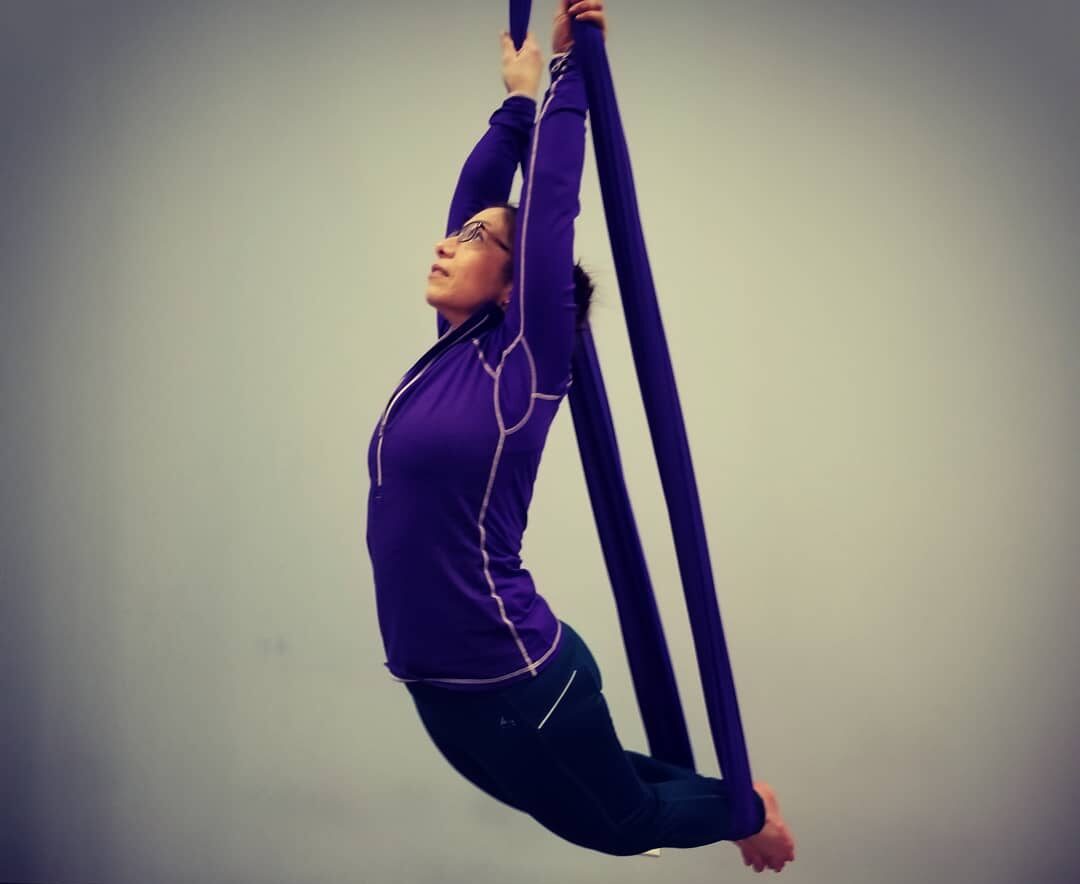
Aerial yoga is practiced using a hammock or silks suspended from the ceiling and adjusted to your height. You can perform poses fully supported by the fabric or use it as a gentle assist. What surprised me most in my first class was how accessible it can be, especially for people with joint pain or limited mobility. Because the silks lift some of your weight off the ground, they reduce pressure on the joints and make movement feel lighter and more supported.
The benefits go far beyond physical ease. The silks can help with spinal decompression, allowing the back to lengthen and release in ways that are hard to achieve on the mat. They also support deeper stretching, improved balance, and a sense of calm that comes from being gently held. Many people find inversions more accessible in the hammock, which can be both empowering and deeply soothing.
If you’ve struggled with joint discomfort, tightness, balance challenges, or simply want to explore movement in a new way, a beginner aerial yoga class might be a beautiful place to start.
I do offer one gentle caution: if you experience motion sickness or vertigo, aerial yoga may not be the best fit. Listening to your body always comes first.
Aerial yoga invites you to move with curiosity, trust, and a little bit of play — and sometimes, that’s exactly what we need. We will take a deeper dive into a few of these in the next post.
Joint‑Friendly Support & Spinal Decompression
One of the most powerful benefits of aerial yoga is the way the hammock supports your body, especially your joints. Because the silks lift part of your weight off the ground, they reduce pressure on the knees, hips, wrists, and spine. This makes movement feel lighter, safer, and more accessible — especially for anyone dealing with chronic pain, stiffness, or limited mobility.
The gentle suspension also allows for natural spinal decompression. When you lean, hang, or invert in the hammock, the spine has space to lengthen and release tension that often builds from sitting, stress, or everyday movement patterns. Many people experience a sense of relief they’ve never felt on a traditional yoga mat.
Aerial yoga creates a supportive environment where your body can explore movement without strain, offering a blend of ease, freedom, and therapeutic release
Accessible Inversions & Improved Balance
Inversions can feel intimidating on the mat, but the hammock makes them surprisingly approachable. With the silks supporting your weight, you can explore upside‑down shapes with more confidence and less fear of falling. This support helps you build strength, body awareness, and trust in your own abilities.
The hammock also challenges and improves balance in a gentle, playful way. Because the fabric moves with you, your stabilizing muscles naturally engage, helping you develop steadiness and coordination over time. Even simple poses feel different — and often more empowering — when the hammock adds both support and a touch of challenge.
For many people, aerial yoga becomes a doorway into movements they never thought possible, offering a blend of confidence, curiosity, and calm.
Slow Flow
Why I love Slow Flow practice
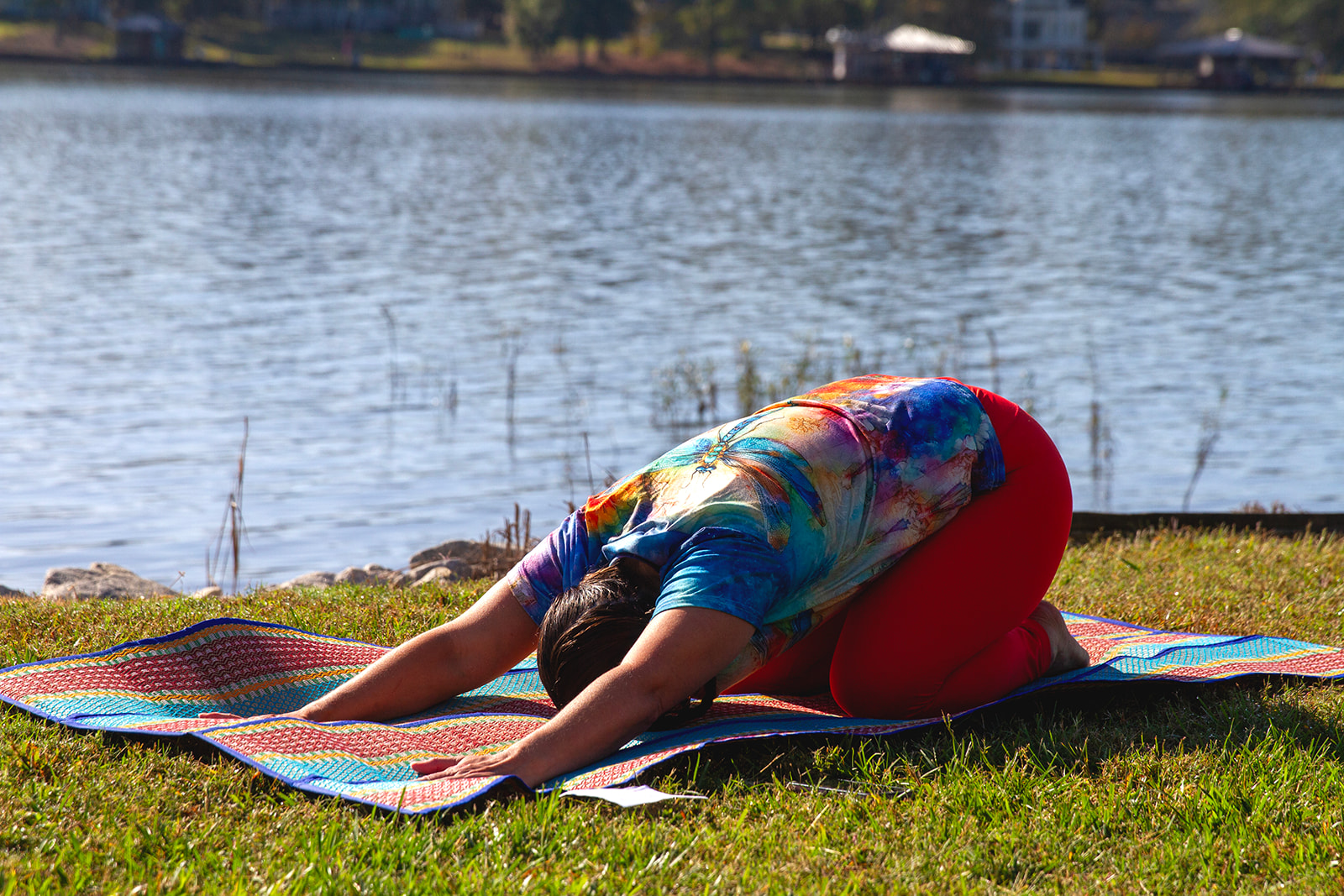
They say to do what you love, and for me, that has always been slow flow yoga. It invites you to soften your pace, breathe deeply, and truly experience each pose. Instead of moving with one breath per shape, slow flow offers 3–5 breaths, giving you time to settle in, adjust, and feel your body respond.
This spaciousness creates a calmer, more mindful practice. Your muscles have time to engage safely, your breath becomes steadier, and your mind begins to quiet. It’s a gentle way to reduce stress and reconnect with yourself.
I’m also drawn to Yin‑inspired relaxing practices, where supported poses are held for 2–5 minutes. These longer holds soothe the nervous system and reach the deeper layers of connective tissue, offering a sense of release that fast‑paced movement can’t touch.
Both styles remind me that slowing down isn’t a luxury — it’s a form of healing.
Gentle/Slow Flow
Slow Flow: Spacious, Intentional, and Deeply Grounding
Slow flow takes the essence of vinyasa and softens the edges. Instead of rushing from one shape to the next, you linger. You breathe. You feel. In slow flow, each pose is held for 3–5 breaths, giving your body time to settle and your mind time to arrive.
What defines slow flow:
- Longer holds allow the body to open gradually.
- Mindful transitions help you understand how you move, not just where you’re going.
- Space for alignment adjustments supports safety and body awareness.
- A calmer nervous system emerges as the pace slows and breath deepens.
Why I love teaching it:
Slow flow feels like a conversation with your body rather than a performance. You’re not just doing yoga — you’re experiencing it. The slower pace encourages presence, reduces stress, and helps you notice the subtle shifts that often get lost in faster practices. It’s grounding, nurturing, and accessible for all levels.
Relaxing/Yin Flow
Yin‑Inspired Relaxing Practice: Stillness as Medicine
Yin‑oriented practice is the quiet counterpart to active yoga styles. Here, poses are held for 2–5 minutes, often supported by props like bolsters, blankets, or blocks. The goal isn’t to stretch the muscles but to gently access the deeper layers of connective tissue while calming the nervous system.
What defines Yin‑inspired practice:
- Long, supported holds encourage deep release.
- Props create comfort, allowing the body to soften without strain.
- The parasympathetic nervous system activates, shifting you into rest‑and‑digest mode.
- Stillness becomes the teacher, revealing where tension hides and how it dissolves.
Why it’s so powerful:
In a world that glorifies productivity and speed, Yin offers a rare invitation to pause. The longer holds help unwind chronic tension, soothe anxiety, and cultivate patience. It’s a practice of surrender — not giving up, but letting go.
🌼 The Common Thread: Slowing Down to Come Home to Yourself
Whether you’re moving slowly through a flow or settling into a long Yin hold, these practices share a beautiful truth: slowing down is healing. When the breath lengthens and the mind quiets, the body finally has space to release what it’s been holding. Stress softens. Anxiety eases. Presence returns.
These styles remind me that yoga isn’t about how quickly we move — it’s about how deeply we feel.
Outdoor Sessions
Benefits of practicing Outdoors
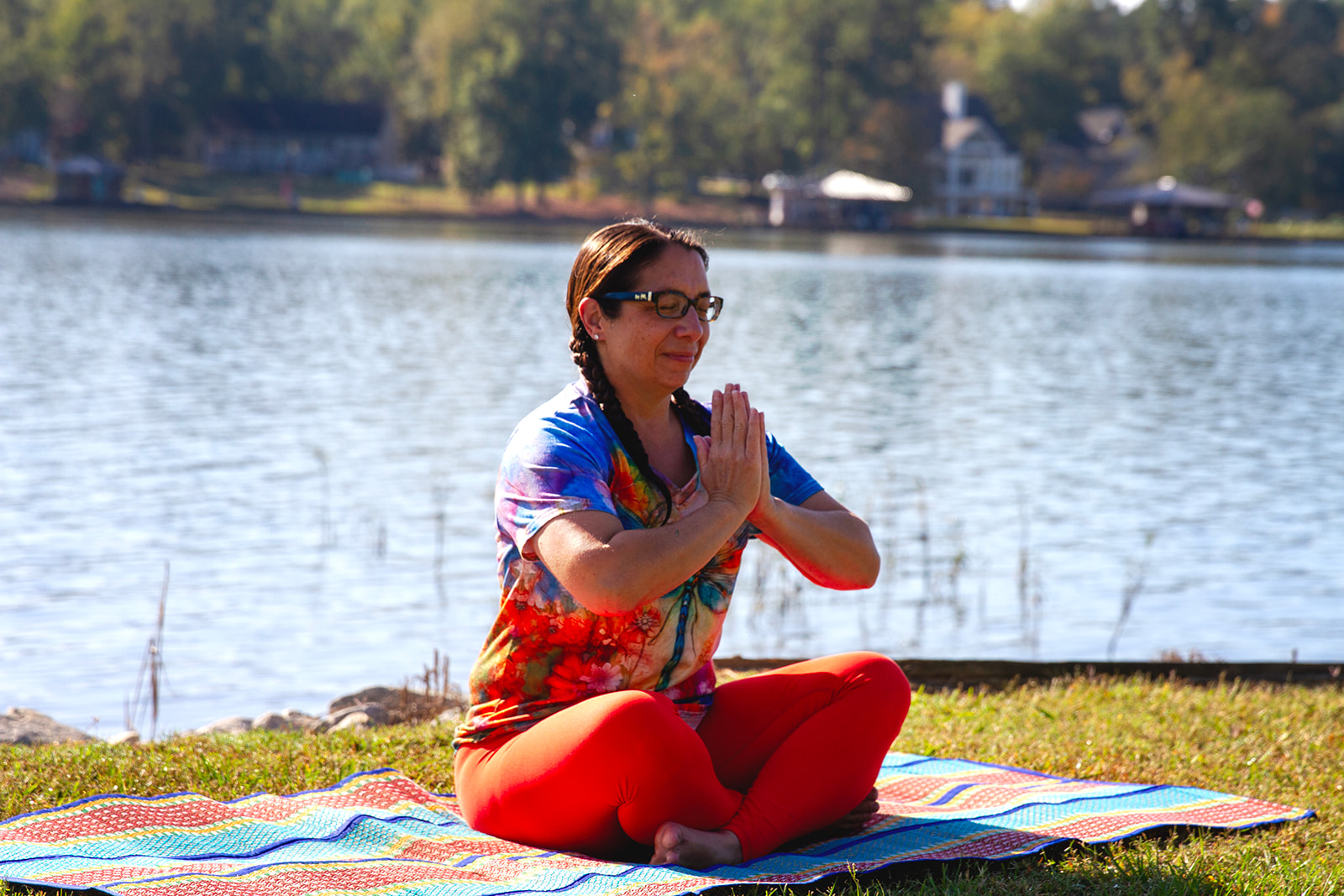
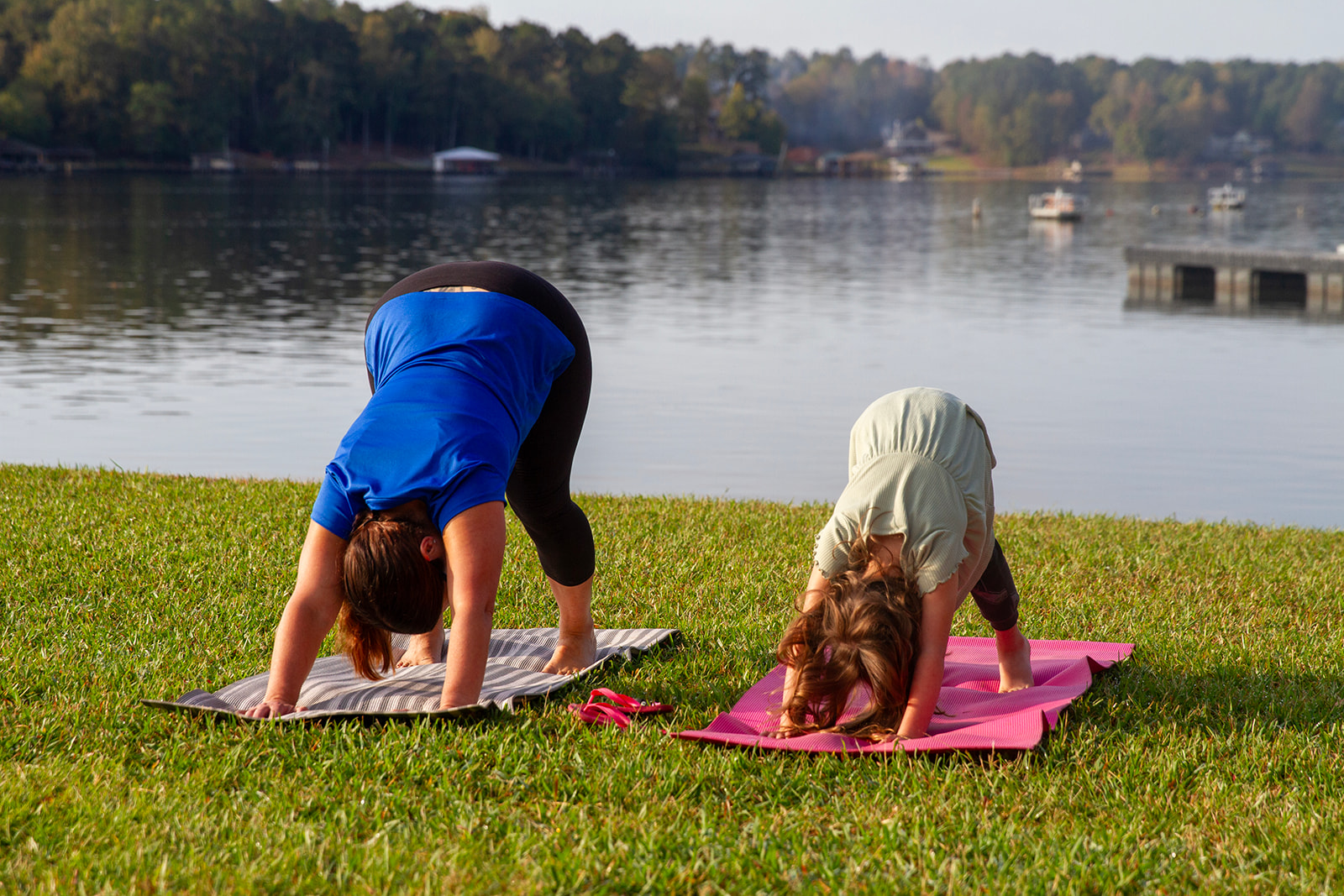
There’s something undeniably powerful about taking your practice outside. The earth carries its own natural electrical current, and so do our bodies. When you practice outdoors — whether you’re standing barefoot in the grass, sinking your toes into warm sand, or simply sitting on the earth — you tap into that connection in a very real, grounding way.
Practicing outside awakens all the senses.
You feel the breeze move across your skin, the sun warming your face, the texture of the ground beneath you. You hear birds, waves, wind — the same sounds spas try to recreate because nature’s rhythm naturally relaxes the nervous system. Sunshine offers warmth and a gentle dose of vitamin D, lifting your mood and energy.
When the weather cooperates, I even start my mornings by stepping outside barefoot with my coffee. It’s a simple ritual, but it helps me feel grounded before the day begins.
Yes, there might be bugs or uneven ground, but once you embrace the imperfect beauty of being outdoors, you open yourself to all the healing benefits nature has to offer. Practicing outside reminds you that yoga isn’t just movement — it’s connection, presence, and belonging to the world around you.
Yoga in the Park
In 2020, I had the opportunity to teach a class by the lake, and it was such a beautiful experience that I knew I wanted more of it. The following summer, I decided to move my usual Saturday morning class outdoors. I visited several parks around town and chose one that offered the best of both worlds — shade on those hot summer days and sunshine to warm us up on the cooler mornings.
Of course, when it rains, we still shift back to the studio, but whenever the weather cooperates, we take full advantage of being outside. The feedback from students was overwhelmingly positive, and that first season confirmed what I already felt: practicing in nature adds something special you just can’t recreate indoors.
I’ve continued offering this outdoor class every year since, and it remains one of my favorite ways to share yoga — grounded, connected, and surrounded by the simple beauty of the park.
Traveling outdoor practice
When we decided to embark on this six‑month RV journey, I knew my yoga practice had to come with me. What I didn’t realize at first was how deeply I would want to share the incredible places we were visiting with my yogis back home.
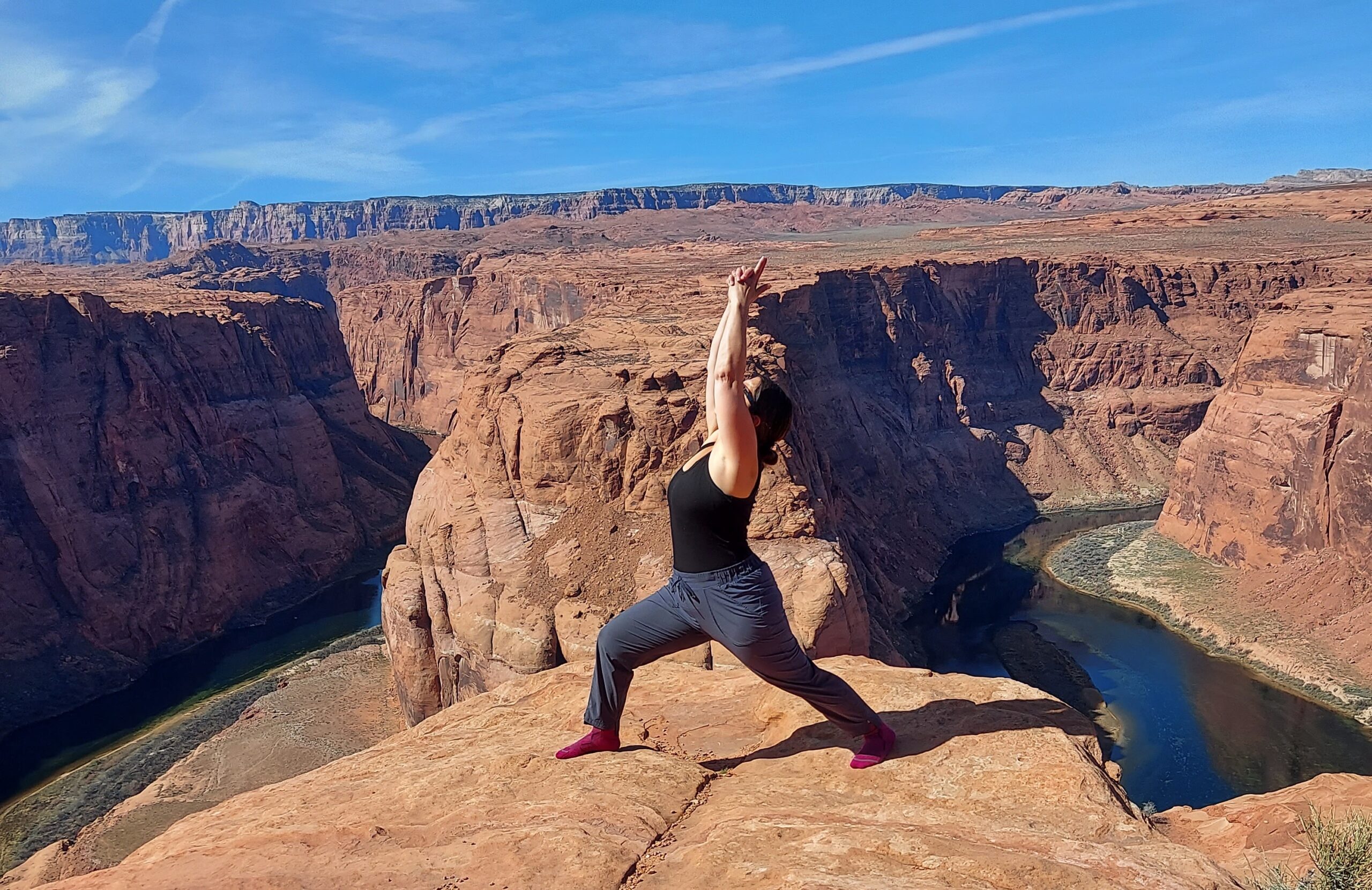
That inspiration led me to start recording my practices outdoors — on canyon rims, beside rivers, along coastlines, and in all the beautiful spaces we’ve explored. Sharing these sessions on my YouTube channel felt like the perfect way to bring others along for the ride, offering not just movement, but a glimpse into the landscapes that have been shaping my own practice.
I also felt called to document our travels more personally, both for myself and for friends and family who wanted to follow our journey. That’s what sparked the creation of this website — a space to gather the stories, practices, and moments that make this adventure so meaningful.
Paddleboard Yoga
Benefits of spending time in Water
Water has been part of us since the very beginning — our first home in the womb was a warm, fluid world. Because of that, our bodies naturally respond to water, often in deeply soothing and restorative ways.
Salt water, in particular, offers unique benefits. It’s rich in minerals like magnesium and carries naturally occurring negative ions, which many people believe can support oxygen absorption and help the body relax. Salt water can also be gentle on the skin, reduce inflammation, and encourage the parasympathetic nervous system to activate — the state where cortisol drops and the body shifts into rest and recovery.
Fresh water offers many of the same benefits, just in a softer way. Whether you’re floating in a lake or wading into a river, time in the water can support relaxation, ease stress, reduce pain, improve sleep, and enhance overall wellbeing.
Coming from Minnesota, I’ve always felt lucky to have endless lakes to choose from. They may not be salt water, but many are cool, clear, spring‑fed, and incredibly refreshing. Of course, it’s always important to check local water quality before swimming in any natural body of water.
Whether it’s the ocean, a lake, or a quiet stream, spending time in water reconnects you with something ancient and familiar — a sense of calm that feels like coming home.
Paddling basics
If you’re new to stand‑up paddleboarding (SUP), I always recommend renting a board and taking a class before heading out on your own. I started SUP with my daughter back in 2015 — we took a short lesson in San Diego while on vacation, and we were hooked from the very first paddle.
When you’re choosing a board, start with something wide and stable. A wider board with a rounded nose offers better balance, which makes learning much easier. Make sure your paddle is adjustable and set to the correct height for your body. And always wear a properly fitted flotation device — safety first.
If possible, learn in a place without motorized boats. Calm, quiet water makes a huge difference when you’re getting started. Begin on your knees to practice your paddle strokes and get your “sea legs.” Once you feel steady, you can try standing. Taller paddlers often have a higher center of gravity, so standing may feel a bit trickier at first — be patient with yourself.
When you’re comfortable on your feet, explore different strokes and enjoy a gentle paddle. Keep in mind that windy days and boat wake can make things more challenging, so give yourself grace if you’re struggling. It’s all part of the learning process.
I also recommend practicing how to get back on your board in water where you can’t touch the bottom. It’s an important skill and builds confidence for future adventures.
From there, the world is yours to explore — lakes, rivers, coastlines, wherever your travels take you. For anyone curious, I use an Outroad inflatable board with a car‑powered inflation pump, and it’s been a great companion on the road
Yoga and SUP
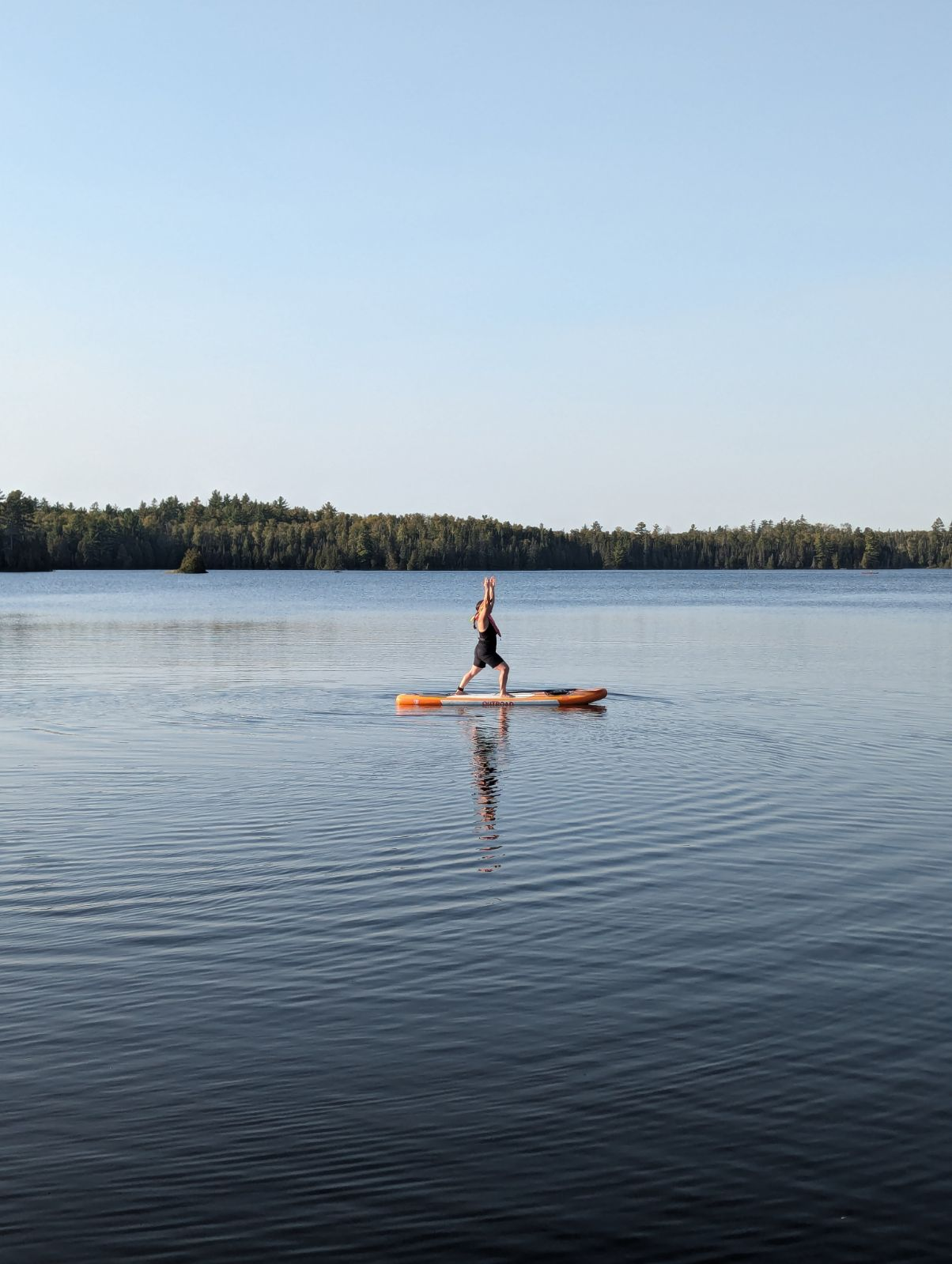
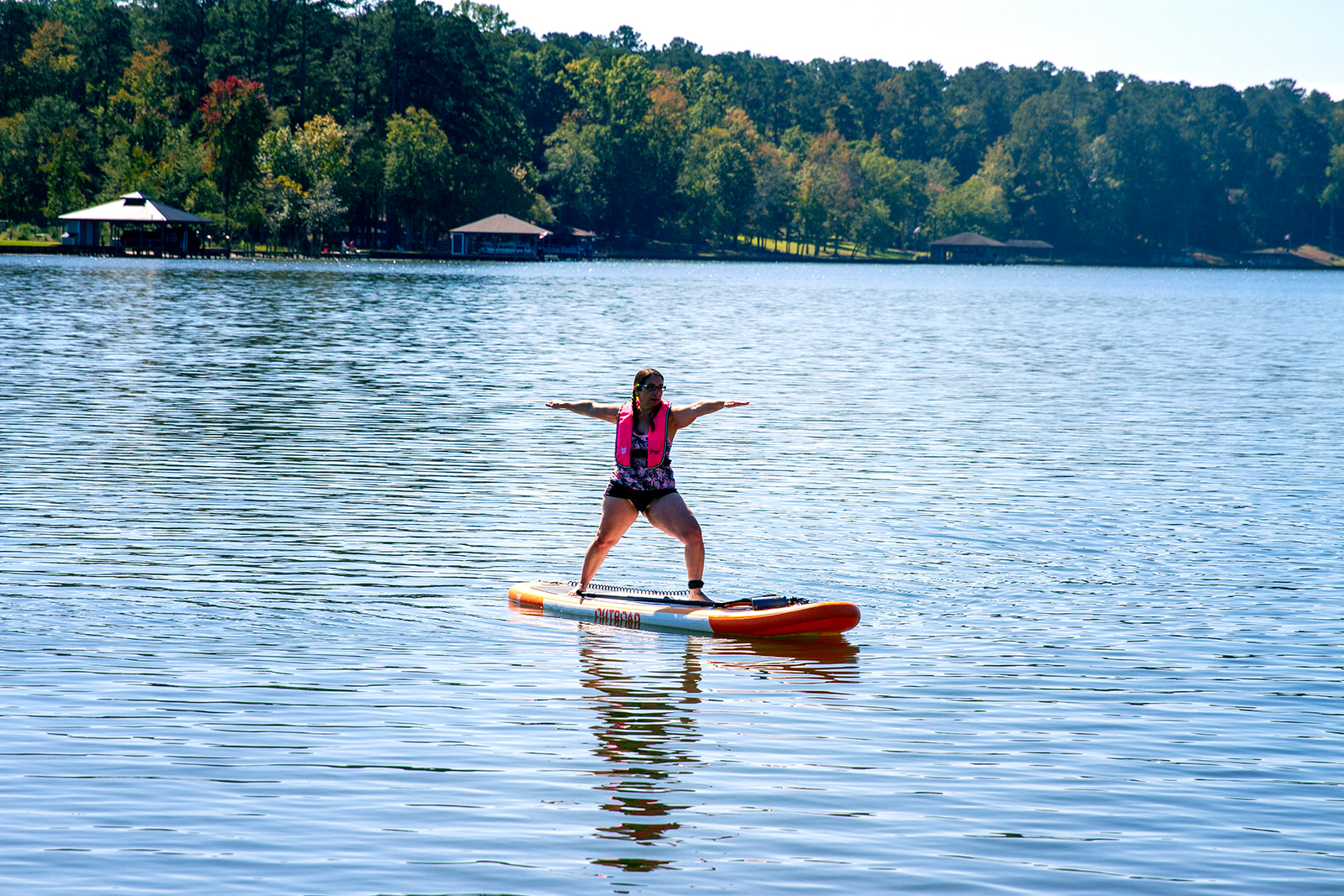
I had been paddleboarding for over five years before I ever thought to combine it with yoga. I remember seeing someone on Instagram practicing on their board and thinking, Why not give it a try? There are SUP yoga classes out there, but I haven’t taken one or offered them myself — I simply headed to my local lake on a calm day and experimented.
I paddled out to a quiet, shallow cove and tied off my paddle. Some people prefer to anchor their board or secure it to something on shore, but I like to free‑float when I practice. It adds a gentle, meditative sway to the experience.
I started with the basics:
child’s pose → high kneeling → tabletop → downward dog → high plank → cobra.
Once those felt steady, I added standing shapes like mountain pose, forward fold, and high lunge. This is where things get interesting — unlike on land, a SUP lunge needs a wide stance for stability. From there, I dropped the back knee and lifted my arms to the sky.
Eventually I added Warrior I, Warrior II, and Reverse Warrior. You can explore Side Angle and Triangle, but they shift your center of gravity dramatically, so they’re definitely more advanced on the board.
The key is to start slow, stay patient, and give yourself plenty of grace when things get wobbly. Falling in is part of the fun. Most of all, enjoy the playfulness of it — SUP yoga is a beautiful blend of balance, breath, and being fully present on the water.